
Buying a home is one of the biggest decisions of your life — and for a Muslim, it comes with a question beyond interest rates: how do I finance my home without compromising my faith?
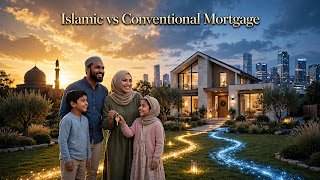
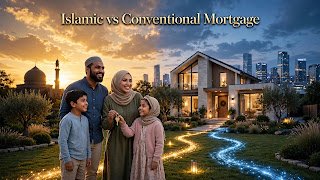
In 2026, Islamic home financing is mature and widely available. This guide compares Islamic vs conventional mortgages honestly: how each works, what it costs, and who should choose which.
Watch: Building Halal Wealth
The One Difference That Changes Everything
A conventional mortgage is a loan with interest (riba) — prohibited in Islam. An Islamic mortgage is never a loan: the bank buys an asset and sells or leases it to you at a disclosed profit. Same house, fundamentally different contract.
How an Islamic Mortgage Actually Works
Murabaha: the bank buys the property and sells it to you at cost plus an agreed profit, paid in fixed installments. Ijara: the bank buys and leases it to you; ownership transfers at the end. Diminishing Musharaka: you and the bank co-own; you gradually buy the bank's share.
How a Conventional Mortgage Works
The bank lends you money at interest; you repay principal plus interest over decades. Miss payments and interest compounds. The contract is interest-based from the first day.
Side-by-Side Comparison
- Contract: asset sale/lease vs interest loan.
- Late payments: no compounding interest vs fees + compounding.
- Sharia: permissible vs riba — impermissible.
- Cost: often comparable; compare total cost of real offers.
The Honest Cost Question: Which Is Cheaper?
Neither is always cheaper. Islamic financing can cost slightly more (smaller market, less competition) or be competitive. Compare the total cost of each real offer — not just the monthly figure. And remember: for a Muslim, permissibility is not optional.
Who Should Choose Which?
Choose Islamic if you want your home financed without riba — the contract structure matters more than small cost differences. Conventional is not an option for observant Muslims, whatever the rate.
Frequently Asked Questions
Is an Islamic mortgage really halal?
When structured properly with qualified Sharia oversight — yes. Look for a named Sharia board.
Can I refinance from conventional to Islamic?
Often yes; providers offer refinancing that replaces the interest loan with a halal contract.
What if no Islamic option exists where I live?
Consult a qualified scholar about your specific situation — necessity has rulings.
A Final Word: A Home Built on Halal Foundations
A home is more than bricks — it is where barakah lives. May Allah bless your home and make it a place of peace. Ameen.
The Honest Cost Comparison: A Worked Example
Let us put real (illustrative) numbers on the table. Take a $400,000 home with 20% down, so $320,000 is financed. The illustration below uses a 6.5% conventional APR and a 6.5% illustrative Islamic profit rate:
| Option | Term | Monthly payment | Total paid | "Interest" / markup |
|---|---|---|---|---|
| Conventional mortgage @ 6.5% APR | 30 years | $2,023 | $728,142 | $408,142 interest |
| Conventional mortgage @ 6.5% APR | 20 years | $2,386 | $572,600 | $252,600 interest |
| Islamic (murabaha-style) @ 6.5% illustrative | 20 years | $2,386 | $572,600 fixed | $252,600 markup |
| Islamic (murabaha-style) @ 7.0% illustrative premium | 20 years | $2,481 | $595,430 fixed | $275,430 markup |
All figures are illustrative educational examples — not offers or quotes. Actual pricing varies by provider, country, credit profile, and market conditions.
The honest insight most comparisons hide: at the same rate and the same term, the total cost is nearly identical. The Islamic option often carries a modest premium because Islamic financiers have smaller scale and higher structuring costs. The real differences are structural, not numerical:
- Certainty: in a murabaha-style contract your total is fixed on day one.
- Late payments: conventional lenders charge compounding interest on arrears; Islamic contracts may only charge actual administrative costs or donate late fees to charity.
- Ownership and risk: ijara means the financier owns the property while you lease-to-own; a conventional mortgage means you own it with a lien.
Try It: Compare Your Own Scenario
Adjust the numbers below. Educational estimate only — not financial advice and not a quote.
Before You Decide: A 4-Point Checklist
- Verify certification: ask for the Sharia board or scholar certificate and read which standards were applied.
- Compare three providers minimum — Islamic and conventional — using the same home price and term.
- Ask about exit costs: early-settlement fees, refinancing rules, and what happens on default. Get it in writing.
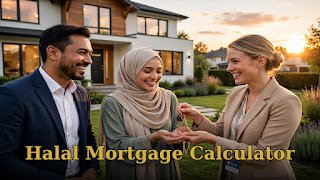
- Run the tools: Halal Mortgage Calculator and Mortgage Rates Compared 2026.
Sources & Further Reading
- AAOIFI Sharia Standards — aaoifi.com
- US Consumer Financial Protection Bureau — consumerfinance.gov
- UK Financial Conduct Authority — fca.org.uk
Educational content only — not financial advice.